Most businesses focus on design when ordering signage. They think about how the sign will look, where it will go, and how it will represent their brand. What often gets overlooked is how the sign is actually produced.
There are two main production models. One is in-house production, where a Sarasota Sign Shop completes the work internally. The other is outsourced production, where parts of the project are handled by third-party vendors.
For any Sarasota sign shop, this difference affects quality, timelines, and communication. It also impacts how smoothly a project moves from concept to installation.
This article explains how each approach works and why it matters for commercial signage projects.
What In-House Sign Production Means
In-house production means the sign company handles the entire sign production process internally.
This includes:
- Design and proofing
- Printing and fabrication
- Finishing and preparation
- Installation coordination
With in-house printing, equipment such as large format printers, laminators, and contour cutters are located on-site. The same team that designs the sign is often involved in preparing it for production.
This setup allows direct control over each step. Adjustments can be made quickly. Materials can be tested and verified before production begins.
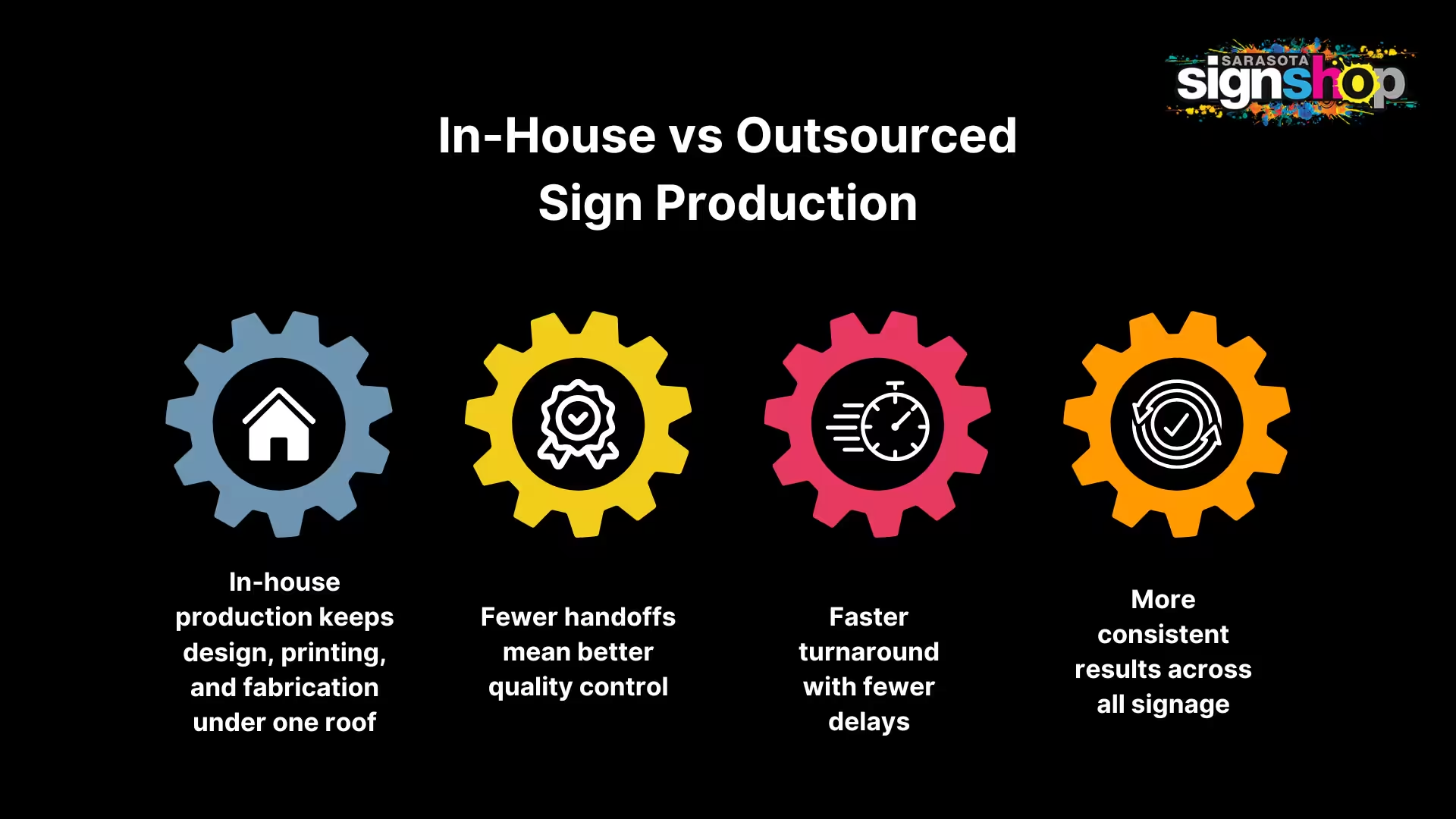
For custom signs Sarasota, this approach reduces the number of handoffs between teams. It also keeps responsibility within one organization.
What Outsourced Sign Production Means
Outsourced production means that one or more parts of the project are handled by external vendors.
For example:
- A sign company may design the project but send printing to another provider
- Fabrication may be done by a separate manufacturer
- Installation may be handled by a third-party crew
This model relies on coordination between multiple companies. Each vendor is responsible for a different part of the project.
Outsourced printing is common in situations where a company does not have its own production equipment. It can also be used for specialty items that require unique capabilities.
While outsourcing can expand what a company offers, it also introduces additional steps. Each step requires communication, scheduling, and quality checks across different teams.
How Production Method Affects Quality
Production method has a direct impact on final quality.
With in-house production, the same team manages color calibration, material selection, and output. This helps maintain consistency across all elements of the project.
For example:
- Colors can be matched accurately across multiple prints
- Materials can be selected based on real testing
- Adjustments can be made immediately if something does not meet standards
This level of control supports stronger signage quality control.
In outsourced production, quality depends on coordination between vendors. A printer may interpret colors differently than the designer intended. Materials may vary depending on supplier availability.
A study in the printing industry shows that color variation can increase by up to 15 percent when production is handled across multiple vendors without standardized calibration.
For commercial signs Sarasota, especially multi-location or multi-piece projects, consistency becomes more difficult when production is split.
How Production Method Affects Timelines
Timelines are another key difference.
In-house production reduces delays because work stays within one facility. Files move directly from design to production without waiting for external scheduling.
Adjustments can be made the same day if needed. This helps keep projects on track.
In outsourced production, each step may involve separate scheduling:
- Sending files to a printer
- Waiting for production availability
- Shipping materials back to the sign company
- Coordinating installation after delivery
Each step adds time. According to industry averages, outsourcing can add several days to a project timeline, depending on complexity.
For projects with deadlines such as grand openings or rebrands, these delays can affect overall planning.
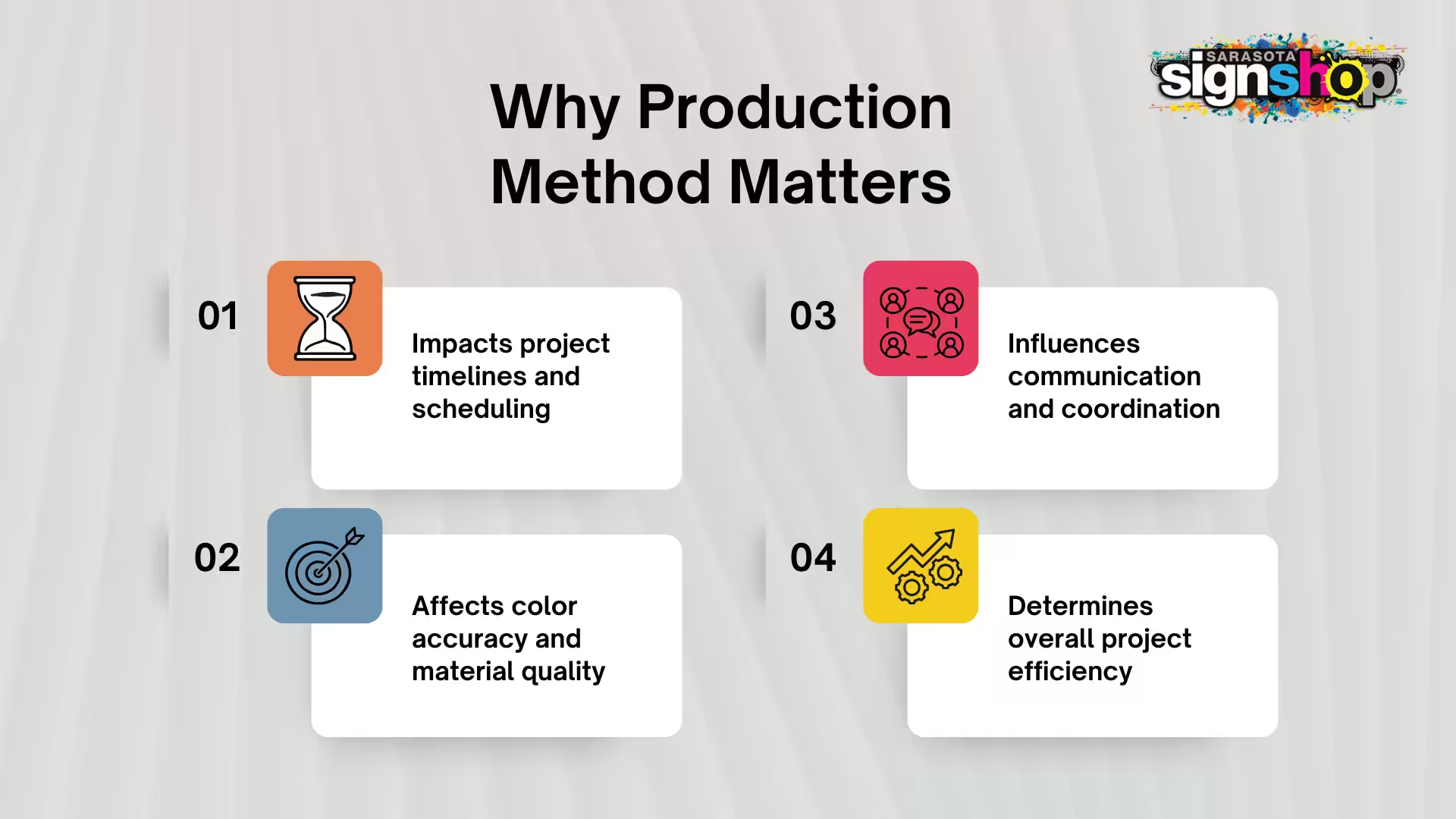
Communication and Project Coordination
Clear communication is important in any signage project.
With in-house production, communication stays within one team. Designers, production staff, and installers can coordinate directly.
This allows:
- Faster decision making
- Fewer misunderstandings
- Better alignment between design and final output
In outsourced models, communication flows through multiple layers. A message may pass from the client to the sign company, then to a vendor, and back again.
Each step increases the chance of miscommunication.
For example, a small change in design may need to be relayed to multiple parties. This can slow down progress and increase the risk of errors.
For business signage Sarasota, especially larger or more complex projects, fewer communication layers improve efficiency.
Why In-House Production Matters for Commercial Projects
Commercial signage projects often involve multiple elements.
These may include:
- Storefront signage
- Interior graphics
- Vehicle wraps
- Directional signs
Consistency across all components is important. Branding must match in color, scale, and quality.
In-house production supports this by using the same equipment, materials, and processes across the entire project.
For example, a business with multiple locations may need identical signage at each site. In-house production helps maintain uniform results.
This is especially important for developers, property managers, and franchise operators who require repeatable outcomes.
Large format printing Sarasota projects also benefit from in-house control, as large graphics require precise alignment and consistent output across panels.
When Outsourcing May Still Be Used
Outsourcing is not always negative. There are situations where it is practical.
Examples include:
- Specialty fabrication that requires unique equipment
- Large-scale manufacturing beyond in-house capacity
- Unique materials not regularly stocked
In these cases, outsourcing can expand capabilities.
However, even when outsourcing is used, coordination and quality control remain important. A well-managed process still requires oversight to ensure the final result meets expectations.
Conclusion
The difference between in-house and outsourced production affects every part of a signage project.
In-house production provides more control over quality, timelines, and communication. It allows faster adjustments and more consistent results.
Outsourced production can introduce additional steps, which may lead to delays or inconsistencies if not managed carefully.
For businesses evaluating a Sarasota sign shop, understanding how production is handled helps set expectations for the project.
Clear production control leads to smoother execution, better coordination, and more reliable outcomes.
Get a Quote with Us Today
If you are planning a signage project and want a clear, controlled production process, you can request a quote or schedule a consultation with Sarasota Sign Shop.