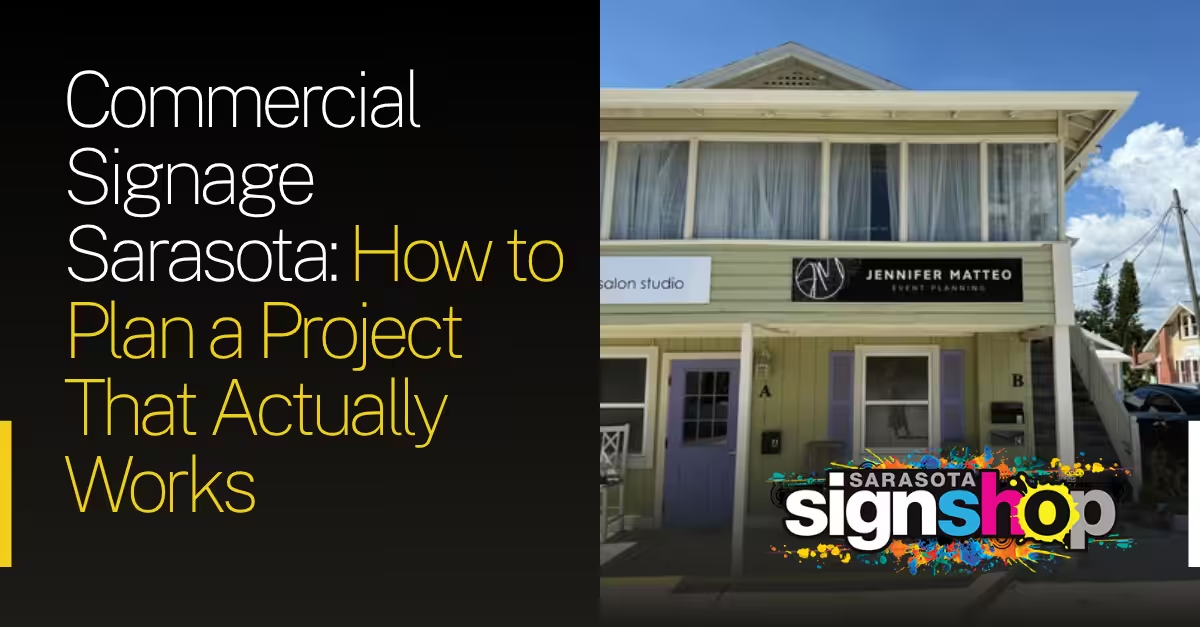
Commercial signage is more than choosing a sign and sending artwork to a printer. A successful commercial signage Sarasota project starts with the location, the people who need to see the sign, the viewing distance, the material, and the way it will be installed.
For a storefront, office, retail center, medical facility, construction project, or commercial development, these decisions need to work together. A sign can look good in a design file and still be difficult to read from the road or poorly suited to its installation site.
Sarasota Sign Shop works with businesses, property managers, builders, developers, and commercial teams throughout Sarasota, Lakewood Ranch, Bradenton, and Venice. Here is what to consider before ordering commercial signs.
Start With What the Sign Needs to Do
The first question is not what type of sign you want. It is what the sign needs to accomplish.
Commercial signage commonly serves four purposes:
- Identify a business or property
- Help people find a location
- Communicate information
- Reinforce a brand
One project may need several of these functions. A shopping center, for example, may need an entrance sign, tenant directory, storefront signs, parking signs, and directional signs.
Defining the purpose of each sign makes the rest of the project easier to plan. It also helps prevent a common problem where businesses order individual signs without considering how they work together.
For larger projects, a coordinated signage system can provide more consistent branding and make the property easier to understand.
Review the Site Before Choosing Materials or Sizes
Where a sign will be installed affects almost every production decision.
Before finalising a design, consider:
- Distance from the main viewing area
- Traffic and pedestrian flow
- Mounting surface
- Available installation space
- Landscaping
- Nearby buildings
- Lighting
- Existing signs
- Weather exposure
- Access for installation equipment
A storefront sign viewed by pedestrians has different requirements from a monument sign viewed by drivers. A wall graphic inside an office has different material needs from a construction sign exposed to Florida weather.
Taking photographs and measurements during the planning stage can help identify problems before production begins.
For commercial projects, it is also useful to review the site from the perspective of the person who will actually see the sign. Stand where a driver would approach the property. Walk from the parking area to the entrance. Look at the sign from different angles.
This can reveal visibility issues that are difficult to spot from a drawing alone.
Design Commercial Signs for the Actual Viewing Distance
A sign needs to be readable where it is installed, not just when viewed on a computer screen.
Letter size, contrast, spacing, colour, and message length all affect readability. A sign intended for drivers generally needs a simpler message and larger lettering than a sign positioned beside a reception desk.
A useful commercial sign should answer the most important question quickly.
For example:
- Where is this business?
- Which entrance should I use?
- Where should I park?
- Which building is this?
- Which company occupies this space?
Avoid putting every available detail onto one sign. Long phone numbers, multiple messages, social media accounts, detailed service lists, and several calls to action can make signs harder to read.
For larger properties, wayfinding signs can help create a consistent route between entrances, parking areas, buildings, and destinations.
Choose the Sign Type Based on the Application
There is no single type of commercial sign that works for every property.
Common options include:
| Sign type | Common application | Main planning consideration |
| Storefront signs | Retail, restaurants, offices | Building frontage and viewing distance |
| Monument signs | Property and community entrances | Site visibility, structure, and placement |
| Directional signs | Parking and property navigation | Traffic flow and decision points |
| Tenant panels | Shopping centers and office properties | Consistent sizing and future updates |
| Window graphics | Promotions, branding, and temporary messages | Glass condition and removal |
| Wall graphics | Interior branding and information | Wall surface and viewing distance |
| Banners | Promotions, openings, and temporary campaigns | Mounting and outdoor exposure |
| Yard signs | Real estate and temporary directions | Placement and ground conditions |
| Construction signs | Development and active jobsites | Visibility, mounting, and site changes |
The right choice depends on the property and the intended use. A sign company should consider the complete application rather than recommending a material based only on appearance or price.
Plan Materials Around Florida Conditions
Outdoor commercial signs in Sarasota are exposed to sun, heat, humidity, rain, and wind. Material selection should reflect the expected location and display period.
Factors to consider include:
- UV exposure
- Moisture
- Surface temperature
- Wind exposure
- Installation method
- Expected maintenance
- Expected display period
Aluminum, acrylic, vinyl, corrugated plastic, composite panels, and other substrates can serve different purposes. The appropriate option depends on the sign type and site conditions.
For example, a temporary indoor display does not necessarily need the same material as an exterior sign that will remain in place for an extended period.
Commercial signage should also be inspected periodically. Fading, loose hardware, damaged faces, corrosion, peeling graphics, and water intrusion can affect both appearance and performance.
For more information about outdoor material considerations, see our guide to weatherproof outdoor signs in Sarasota.
Consider Accessibility and Site Requirements
Some commercial signs are subject to accessibility requirements. The federal 2010 ADA Standards include requirements for certain signs identifying permanent rooms and spaces, accessible parking, means of egress, and other applications. Requirements depend on the sign and facility, so businesses should review the applicable standards for their project.
Accessibility is only one part of the planning process. Property rules, landlord requirements, development standards, and local regulations may also affect sign placement, dimensions, lighting, or installation.
The City of Sarasota provides sign and temporary sign information through its Building and Permitting resources. Its zoning department also notes that properties can be subject to different zoning and overlay requirements.
These requirements can change based on the property and project. Confirm current requirements with the appropriate property owner, authority, or project professional before production.
Plan Installation Before Production
A sign should not be designed independently from the way it will be installed.
Installation planning may involve:
- Wall anchors
- Posts
- Frames
- Brackets
- Stakes
- Existing structures
- Window application
- Pole pockets
- Mounting hardware
- Access equipment
The mounting surface also matters. Concrete, stucco, masonry, metal, glass, and other surfaces can require different approaches.
For a larger commercial project, installation planning should happen while the signs are being designed and produced. This gives the production team a clearer understanding of dimensions, finishing, hardware, and site access.
A professional business sign installation in Sarasota project should account for visibility, alignment, mounting conditions, and safe access to the installation area.
Think About the Entire Property, Not One Sign
Commercial properties often need several signs working together.
A retail center may require:
- Property entrance signage
- Tenant directories
- Storefront signs
- Parking signs
- Directional signs
- Building identification
- Temporary leasing signs
A new development may require:
- Development entrance signs
- Construction signage
- Fence graphics
- Wayfinding
- Future phase signs
- Leasing displays
- Community branding
A managed office property may need:
- Monument signage
- Tenant panels
- Building identification
- Suite signs
- Lobby directories
- Parking signs
- Interior wayfinding
Planning these elements together helps maintain consistent colours, typography, materials, terminology, and placement.
This is particularly useful when tenant changes, new construction, renovations, or property rebranding require additional signs later.
Coordinate Signage With the Project Timeline
Signage is often needed at several stages of a commercial project.
A new business may need temporary opening graphics before its permanent storefront sign is ready.
A developer may need construction signs before the first building is complete.
A property manager may need new tenant panels when businesses move in.
A rebrand may require existing exterior and interior signage to be replaced on a planned schedule.
This is why signage should be included in the project timeline rather than treated as a final detail.
Early planning gives the sign team time to review the site, prepare artwork, confirm materials, identify installation requirements, and coordinate production.
Fixed deadlines should be communicated as early as possible. Production and installation timelines vary by project scope, materials, site conditions, and approvals.
Keep Branding Consistent Across Multiple Signs
A commercial property can quickly look inconsistent when every sign is produced separately.
Common causes include:
- Different vendors
- Tenant turnover
- Rush replacements
- Missing brand files
- New construction
- Older signs remaining after a rebrand
- Different interpretations of colours and logos
A coordinated sign specification can establish standards for colours, fonts, logos, panel sizes, materials, mounting, and terminology.
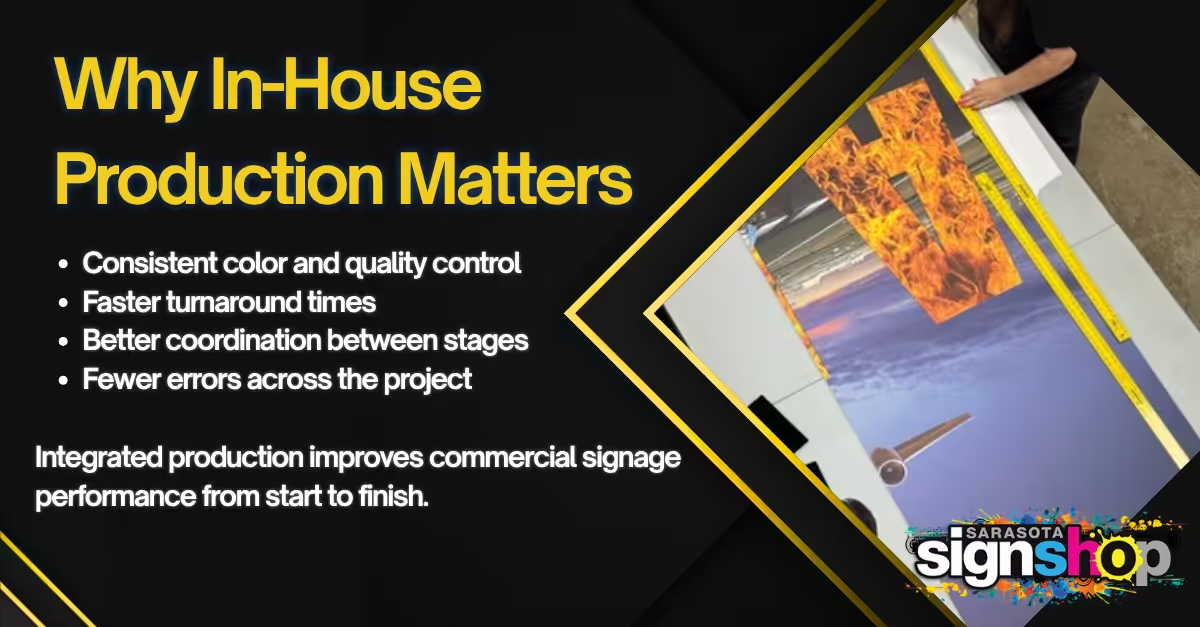
Sarasota Sign Shop handles design and production in house. This allows the team to coordinate artwork and production across multiple sign types rather than treating every item as a separate project.
For developers and property managers, this can be particularly useful when a signage package needs to grow as tenants, buildings, or project phases change.
Use Commercial Signage Where People Actually Look
Visibility should guide placement.
For roadside signs, consider:
- Traffic speed
- Viewing distance
- Driver sightlines
- Landscaping
- Other signs
- Building setbacks
- Lighting
- Entrance location
For pedestrian signs, consider:
- Eye level
- Walking routes
- Doorways
- Parking areas
- Intersections
- Obstructions
- Lighting
A sign placed after a decision point may not help someone make the decision. Directional signs are generally more useful when people see them before they need to turn.
This is especially important for large properties, developments, medical campuses, office parks, and retail centers.
When Should You Replace Commercial Signage?
Replacement should not be based only on age.
Inspect signs when:
- Graphics have faded
- Panels are damaged
- Hardware has loosened
- Tenant information is outdated
- Business branding has changed
- Visibility has been reduced
- A property has been renovated
- A sign no longer matches the surrounding property
- Storms or other weather have caused damage
Some signs may only need a replacement face or panel. Others may need new hardware, structural evaluation, or complete replacement.
A property wide inspection can help determine which signs need immediate attention and which can be addressed during a planned update.
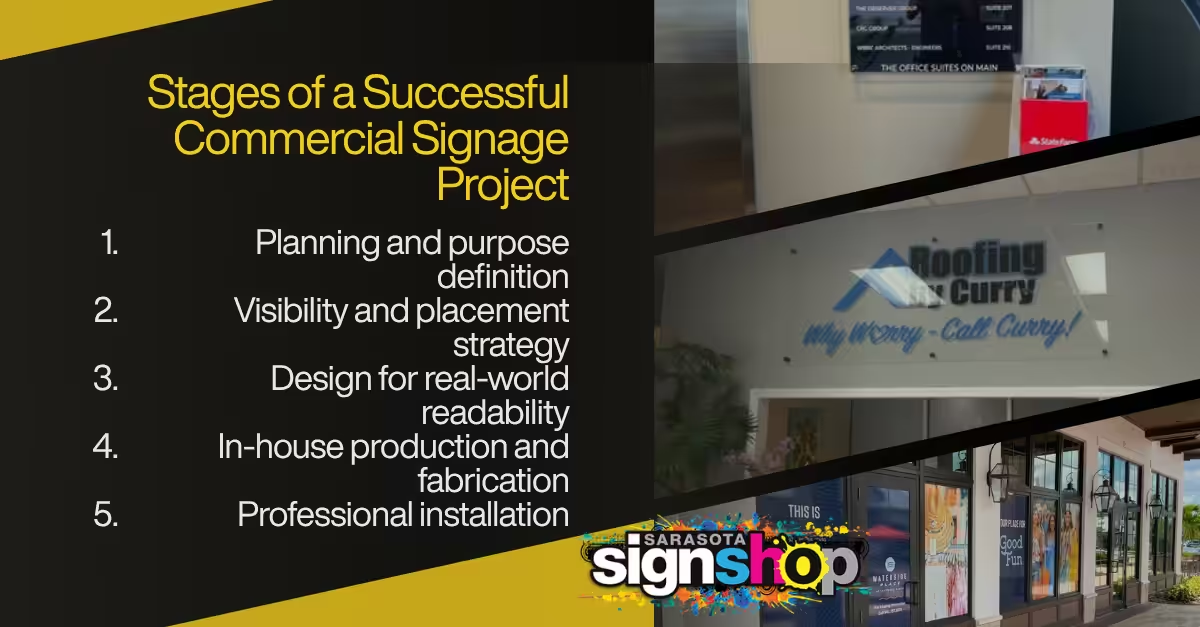
Work With a Sign Partner From Planning Through Installation
Commercial signage involves more than printing.
The process can include:
- Reviewing the project goals
- Assessing the installation location
- Determining viewing distance
- Developing the sign design
- Selecting materials
- Preparing production files
- Producing the signs
- Preparing finishing and mounting components
- Coordinating installation
- Reviewing future replacement or update needs
Sarasota Sign Shop provides in house design and production for commercial signage projects and coordinates installation based on the requirements of the site.
The company serves commercial clients throughout Sarasota, Lakewood Ranch, Bradenton, and Venice, including businesses, property teams, builders, developers, and other commercial projects.
Frequently Asked Questions
What should I consider before ordering commercial signage?
Start with the sign’s purpose, location, viewing distance, size, material, installation method, timeline, and any known property requirements. These factors help determine which sign solution is appropriate.
How do I choose the right material for an outdoor commercial sign?
Consider the location, expected display period, sun exposure, moisture, wind, mounting method, and desired appearance. Material selection should reflect the actual site conditions rather than assuming one material works for every application.
Does commercial signage require a permit in Sarasota?
Some signs may require approval or permits depending on the property, sign type, location, and applicable requirements. The City of Sarasota provides current permitting and zoning information, and project owners should confirm requirements before production.
Can one sign company handle multiple signs for a commercial property?
Yes. A commercial signage provider can coordinate multiple sign types within one project, including exterior signs, tenant panels, wayfinding, window graphics, banners, and interior signage. Coordinating the project through one provider can also help maintain consistency across the finished signs.
Plan Your Commercial Signage Project
Commercial signage Sarasota projects work best when planning starts before production. Purpose, placement, viewing distance, materials, installation, branding, and site conditions all affect the finished result.
Whether you are opening a new business, updating a commercial property, managing tenant changes, developing a new project, or replacing exterior signage, the right plan can help avoid unnecessary changes later.
Sarasota Sign Shop designs and produces commercial signs for businesses, property managers, developers, and other commercial clients throughout Sarasota and the surrounding Gulf Coast.
If you are planning a signage project, request a quote or schedule a consultation to discuss the site, sign types, materials, installation requirements, and project timeline.