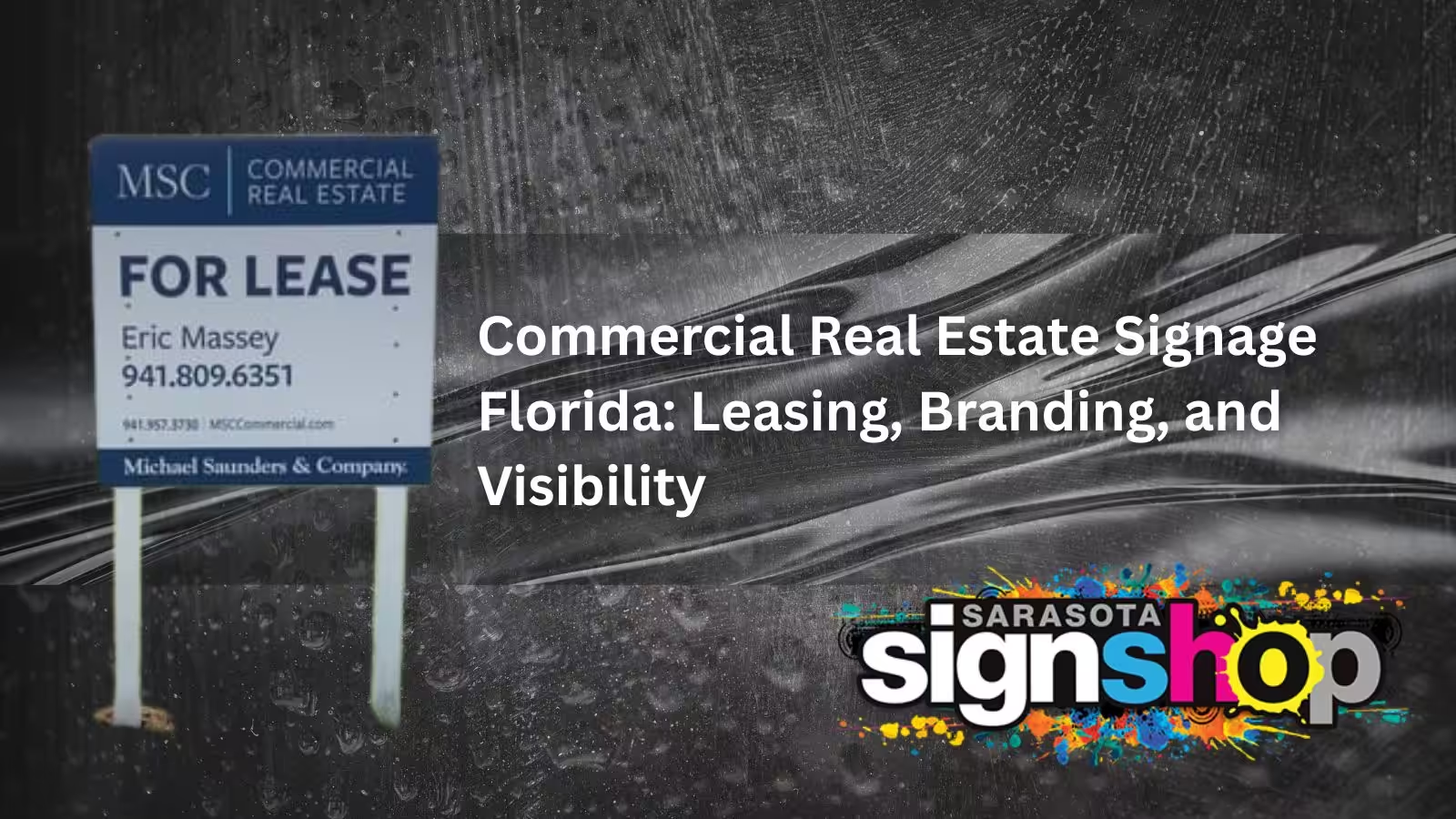
Commercial real estate signage needs to do more than display a property name. It needs to help people identify the property, find the right entrance, locate businesses, understand where to park, and navigate the site.
For property owners, developers, brokers, and property managers, signage is part of how a commercial property functions. A retail center may need a monument sign, tenant panels, storefront signs, parking signs, and internal wayfinding. An office property may need building identification, directories, suite signs, and visitor directions. A development under construction may need project signs, leasing signs, temporary directions, and construction graphics.
Planning these elements as one system can help create a more consistent property and make future updates easier.
Sarasota Sign Shop provides commercial signage design, production, and installation for properties in Sarasota, Bradenton, Lakewood Ranch, Venice, and surrounding areas.
What Is Commercial Real Estate Signage?
Commercial real estate signage includes the signs used to identify, brand, market, and organize a commercial property.
Depending on the property, this can include:
- Monument signs
- Pylon or freestanding signs
- Tenant directories
- Tenant panels
- Building identification signs
- Storefront signs
- Leasing signs
- Directional and wayfinding signs
- Parking signs
- Window graphics
- Construction signs
- Temporary signs
- Interior directories
- Wall graphics
The exact combination depends on the property’s size, layout, tenants, audience, traffic patterns, and development stage.
A small office building may only need a few identification and directional signs. A shopping center or mixed use development may need a coordinated signage package covering the entire property.
Why Commercial Property Signage Matters
Commercial signage serves practical purposes throughout the property.
Property identification
A visible entrance sign helps drivers confirm they have reached the correct property. This is especially important when a site has multiple entrances or sits along a busy road.
Tenant identification
Multi tenant properties need a clear way to identify businesses. Tenant panels and directories can provide this information while maintaining a consistent appearance across the property.
Navigation
Visitors should be able to understand where to go after entering the property. Directional signs can identify buildings, parking areas, leasing offices, loading areas, and other destinations.
Property branding
The entrance and common areas contribute to the overall appearance of a commercial property. Consistent colours, typography, materials, and sign proportions can help create a unified visual system.
Leasing support
Leasing signs and vacant suite graphics can communicate that space is available. They can also provide contact information, property branding, or information about an upcoming tenant.
Signage should support leasing activity without assuming that a sign alone will determine how quickly a property is leased.
Types of Commercial Real Estate Signage
Different areas of a commercial property require different types of signs.
Monument Signs
Monument signs are commonly used at entrances to commercial properties, office parks, shopping centers, developments, and other sites.
They can identify the property and may include tenant panels or other information.
The design needs to consider:
- Roadside visibility
- Viewing distance
- Property architecture
- Available space
- Landscaping
- Illumination
- Tenant information
- Local requirements
- Installation conditions
Sarasota Sign Shop provides monument signs for commercial properties and developments, with design, production, and installation coordinated for the project.
Pylon and Freestanding Signs
Pylon signs can provide high visibility for properties located along major roads.
However, the suitability of a tall freestanding sign depends on the property and applicable regulations. Height, location, setbacks, sign area, illumination, and other requirements can vary between jurisdictions and zoning districts.
For that reason, property owners should confirm applicable requirements before committing to a design or fabrication plan.
Tenant Panels and Directories
Tenant panels are common at multi tenant commercial properties.
A well planned system should account for future changes. Businesses move in and out. Names change. Logos are updated. Vacant spaces need to be removed from directories.
Standardised panel dimensions and consistent design rules can make these updates easier.
Property managers can also use a broader signage checklist for commercial properties to review tenant panels, directories, parking signs, building identification, and wayfinding.
Leasing Signs
Leasing signs communicate that commercial space is available.
Depending on the property, they may include:
- Available space
- Suite information
- Contact details
- Broker information
- Property branding
- Coming soon messaging
A leasing sign should be easy to understand from its intended viewing distance.
For a roadside sign, that may mean a short message with large lettering. A window graphic viewed by pedestrians can provide more information.
Directional and Wayfinding Signs
Wayfinding is particularly important for larger commercial properties.
A visitor may need to find:
- A specific building
- A tenant
- Visitor parking
- A leasing office
- An entrance
- A loading area
- An amenity
- An exit
Directional signs work best when they appear before the point where a decision needs to be made.
Property managers should review vehicle and pedestrian routes separately. A system designed only for drivers may not provide enough information for someone walking from a parking area to a building.
Storefront and Building Signs
Individual businesses also need identification within a commercial property.
Storefront signs can help customers locate a business once they have entered the property. Building identification can help visitors understand which building or section of a larger site they have reached.
The sign design may need to follow landlord or property signage standards.
This is particularly important in shopping centers and office properties where several businesses need to appear together without losing their individual brand identities.
Window Graphics
Windows can provide useful space for leasing messages, branding, temporary promotions, and coming soon information.
Vacant spaces can use window graphics to communicate availability while also presenting property or tenant information.
Perforated window graphics may be appropriate for some applications where visibility through the glass is important. The correct material depends on the window, location, intended display period, and installation requirements.
Construction and Development Signs
Commercial developments often need signage before the finished property is ready for tenants or customers.
Construction and development signage can identify:
- The project
- Developer
- Builder
- Architect
- Future tenants
- Leasing contact
- Project information
- Coming soon messaging
Large format graphics can also display architectural renderings or project branding.
Sarasota Sign Shop provides construction site signage for builders, developers, contractors, and commercial projects.
How to Plan a Commercial Real Estate Signage System
A commercial property should be reviewed as a complete site rather than as a collection of individual signs.
1. Start with the property layout
Review the site plan and identify:
- Main entrances
- Secondary entrances
- Parking areas
- Buildings
- Tenant spaces
- Loading areas
- Pedestrian routes
- Leasing offices
- Service areas
- Future development areas
This creates a basic map of where signs may be required.
2. Identify the people using the property
Different visitors have different needs.
A customer visiting a retail store may need simple parking and storefront directions.
A patient visiting a medical office may need building identification, accessible parking information, and directions to a specific suite.
A prospective tenant may need to find the leasing office.
A delivery driver may need completely different information.
Understanding these routes helps determine what signs are actually necessary.
3. Review viewing distances
A sign viewed from a moving vehicle needs to be designed differently from a sign viewed while walking.
Consider:
- Traffic speed
- Distance
- Letter size
- Contrast
- Lighting
- Viewing angle
- Background clutter
- Landscaping
The goal is not to put as much information as possible on the sign. The goal is to provide the information the viewer needs at the point where they need it.
4. Establish a visual standard
Large properties benefit from a documented signage standard.
This may establish:
- Logo use
- Colours
- Fonts
- Panel proportions
- Arrow styles
- Mounting methods
- Materials
- Tenant panel sizes
- Building names
- Directional terminology
A standard can be especially useful when different signs are produced at different times.
It can also make tenant changes easier to manage.
5. Plan permanent and temporary signage together
Commercial properties change.
A development may have temporary construction access before the permanent entrance is complete. A new tenant may need opening signage before its permanent storefront sign is installed. A vacant space may need leasing graphics while a property waits for a new occupant.
Temporary signs should still fit the property’s overall visual system where practical.
Sarasota Sign Shop’s guide to temporary business signs covers applications including leasing signs, construction signs, temporary directional signs, banners, window graphics, and fence graphics.
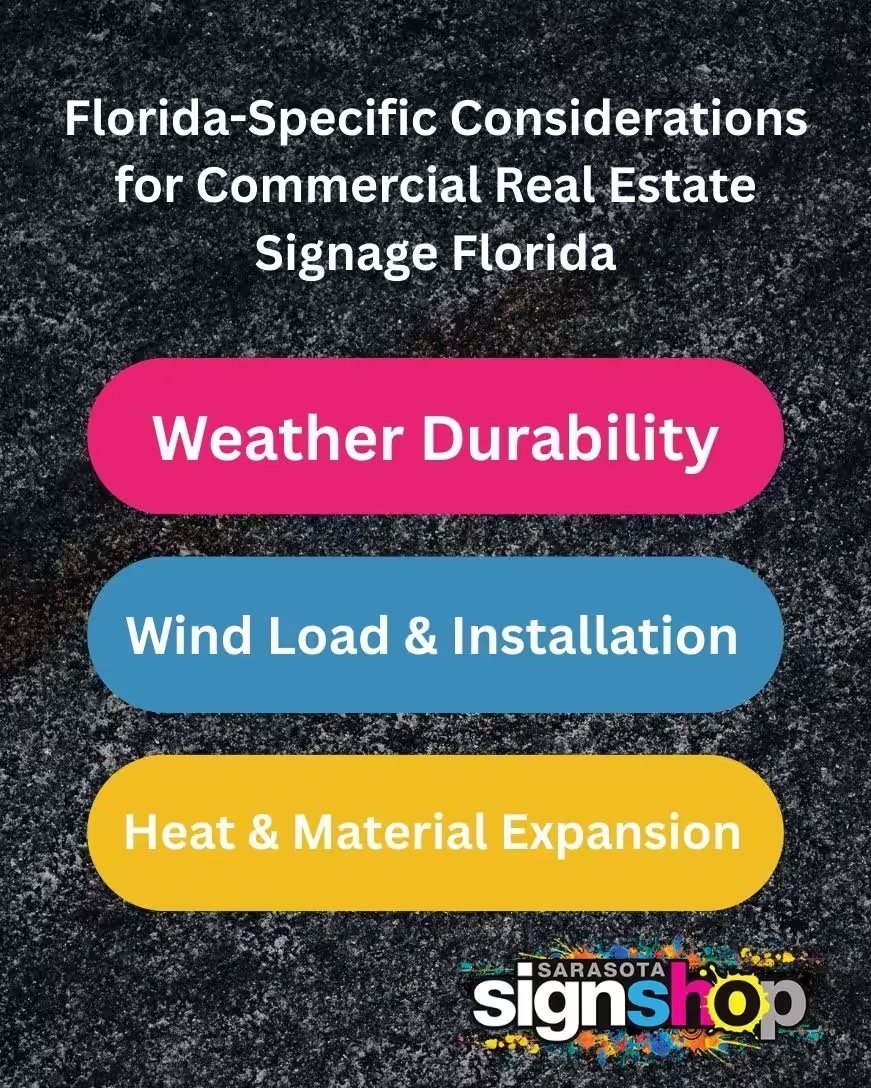
Florida Considerations for Commercial Real Estate Signage
Outdoor commercial signage in Florida needs to account for the conditions where the sign will be installed.
Sun and UV exposure
Outdoor signs can receive substantial sunlight. Material and finishing choices should reflect the expected exposure and display period.
Heat and humidity
Heat and humidity can affect materials, adhesives, hardware, and mounting surfaces. The appropriate material depends on the application and site conditions.
Wind exposure
Freestanding signs, banners, fence graphics, and other outdoor displays need appropriate support and mounting for their intended location.
The sign structure and installation method should be considered alongside the sign design.
Coastal conditions
Properties near the coast may face additional exposure to salt air and moisture. Hardware and material selection should account for the specific environment.
No outdoor sign should be assumed to be completely unaffected by Florida weather.
Check Local Sign Regulations Before Production
Sign requirements are not identical across Florida.
The City of Sarasota explains that every parcel within the city has a zoning designation and that base zones, overlay zones, and other zoning requirements can affect what is allowed on a property.
The City’s development resources also include building and permitting, development review, and zoning services.
This means commercial property owners should confirm applicable requirements before fabrication.
Depending on the project, considerations may include:
- Sign dimensions
- Sign location
- Setbacks
- Illumination
- Freestanding sign requirements
- Site plans
- Property owner approval
- Landlord requirements
- Development standards
- Zoning requirements
The City of Sarasota’s development application materials also identify a sign plan as a requirement for certain site plan applications.
For projects outside the City of Sarasota, requirements may differ. Confirm the applicable rules with the relevant local authority before production.
Consider Accessibility Requirements
Some commercial signs are subject to accessibility requirements under the Americans with Disabilities Act.
The U.S. Department of Justice’s 2010 ADA Standards include requirements for certain signs identifying permanent rooms and spaces. The standards address elements including raised characters, Braille, character proportions, finish, contrast, and sign placement.
Not every commercial sign is subject to the same requirements. Building identification, company logos, directories, directional signs, parking signs, and temporary signs can have different requirements and exceptions.
For projects involving accessibility requirements, review the applicable standards and confirm project specific requirements with the appropriate professional.
Design Multi Tenant Signage for Future Changes
Tenant turnover is a normal part of commercial property management.
A signage system should make it practical to update tenant information without unnecessarily replacing the entire structure.
Useful approaches can include:
- Replaceable tenant panels
- Standardised panel dimensions
- Consistent mounting systems
- Changeable directory components
- Reserved space for future tenants
- Consistent logo sizing
- Documented colour specifications
Planning for change can be more practical than treating the first tenant directory as a finished product that will never need modification.
This is particularly relevant to retail centers, office parks, medical properties, and mixed use developments.
Coordinate Signage With the Property’s Development Timeline
Signage often needs to be installed in stages.
A new development may progress through:
- Site and construction signage
- Project identification
- Pre leasing signage
- Temporary access and directional signs
- Building identification
- Tenant signage
- Permanent wayfinding
- Interior directories
- Amenity and shared space signage
Planning the complete system early can help identify which signs are needed at each stage.
It can also reduce the chance of producing temporary signs that conflict with the permanent property branding.
For residential development projects, Sarasota Sign Shop also covers signage across entrances, sales centers, model homes, neighbourhoods, amenities, and future phases in its guide to master planned community signage.
Why In House Sign Design and Production Can Help
Commercial real estate signage often involves multiple sign types and multiple rounds of updates.
Sarasota Sign Shop handles design and production in house and coordinates installation for commercial projects.
This can help keep project elements aligned across:
- Monument signs
- Tenant panels
- Leasing signs
- Directional signs
- Construction graphics
- Window graphics
- Interior signs
- Replacement panels
The benefit is not simply the production method. It is the ability to coordinate the design, materials, quantities, finishing, and installation requirements as part of one project.
For property managers and developers, that can be useful when a signage system needs to expand or change over time.
When Should Commercial Property Signage Be Updated?
There is no single replacement schedule that applies to every commercial property.
Instead, inspect signage when there is a reason to believe it no longer meets the property’s needs.
Look for:
- Faded graphics
- Damaged panels
- Loose mounting hardware
- Outdated tenant information
- Old logos
- Poor visibility
- Obstructed signs
- Changes to traffic patterns
- New buildings
- Property renovations
- Rebranding
- New tenants
- Missing directional signs
Some issues may only require a replacement panel or graphic. Other situations may call for a new sign system.
A property wide signage audit can help determine what needs attention now and what can be addressed as part of a planned update.
Commercial Real Estate Signage FAQs
What signs does a commercial property usually need?
The requirements depend on the property. Common signs include monument signs, tenant panels, building identification, storefront signs, leasing signs, parking signs, and wayfinding. Larger developments may also need construction signage, window graphics, directories, and interior signs.
What is the difference between a monument sign and a pylon sign?
A monument sign is generally a lower freestanding sign associated with a property entrance or building. A pylon sign is typically taller and designed to provide visibility from greater distances. The appropriate option depends on the property, site conditions, design requirements, and local regulations.
How can commercial property signage support leasing?
Leasing signs can make available space visible to people who pass or visit the property. They can also communicate the property’s name, available space, contact information, or coming soon messaging. Signage should be considered one part of a broader leasing strategy rather than a guarantee of faster occupancy.
How often should tenant signs be updated?
Tenant signs should be reviewed whenever a business moves, changes its name or branding, or leaves the property. Regular property signage audits can also identify outdated panels or directories that have been missed.
Does commercial real estate signage require permits?
Some signs require permits or other approvals while others may not. Requirements depend on the property, sign type, jurisdiction, zoning, and other applicable rules. Confirm the current requirements for the specific property before production.
Can commercial signage be designed for future tenant changes?
Yes. Modular tenant panels, standardised panel dimensions, and planned directory systems can make future updates easier. The right approach depends on the property and the number and type of tenants.
Plan Your Commercial Real Estate Signage
Commercial real estate signage needs to work across the entire property.
The entrance needs to identify the location. Tenant panels need to communicate current information. Wayfinding needs to help visitors reach the right destination. Leasing signs need to communicate available space. Construction signs may need to support a project before permanent signage is installed.
Planning these elements together can create a more consistent signage system and make future updates easier.
Sarasota Sign Shop works with property owners, developers, brokers, property managers, and commercial businesses throughout Sarasota, Bradenton, Lakewood Ranch, and Venice.
If you are planning new commercial signage or reviewing an existing property signage system, Sarasota Sign Shop can help with design, production, installation planning, replacement panels, and coordinated signage packages.