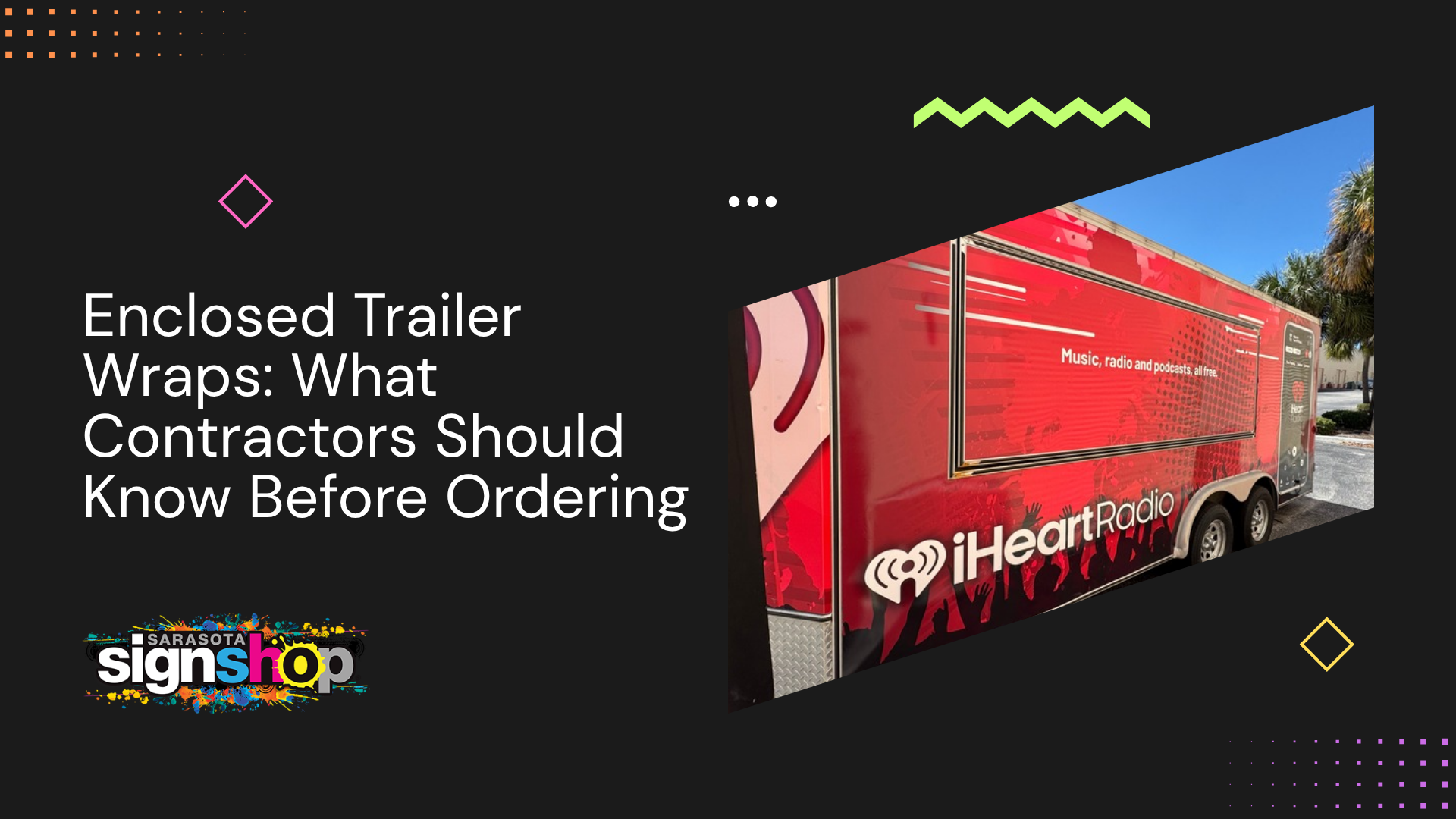
Imagine a landscaping contractor parks an enclosed trailer at a jobsite. The business name and phone number look clear while the ramp is closed, but opening it covers part of the contact information. This is why enclosed trailer wraps need to be planned around the trailer’s actual layout, not just a flat design mockup.
Before ordering, document the trailer’s dimensions, panel condition, doors, hinges, rivets, and existing graphics. Decide what customers must read and where they will see it. Then ask the sign shop to confirm suitable materials, coverage, preparation, and installation requirements before approving the artwork. Photos and measurements help start the conversation, but the trailer itself determines what is practical.
What should you measure before ordering enclosed trailer wraps?
Start with the trailer’s overall dimensions, then record the usable panel areas separately. Overall length and height help identify the trailer, but they do not show exactly how much uninterrupted space is available for graphics.
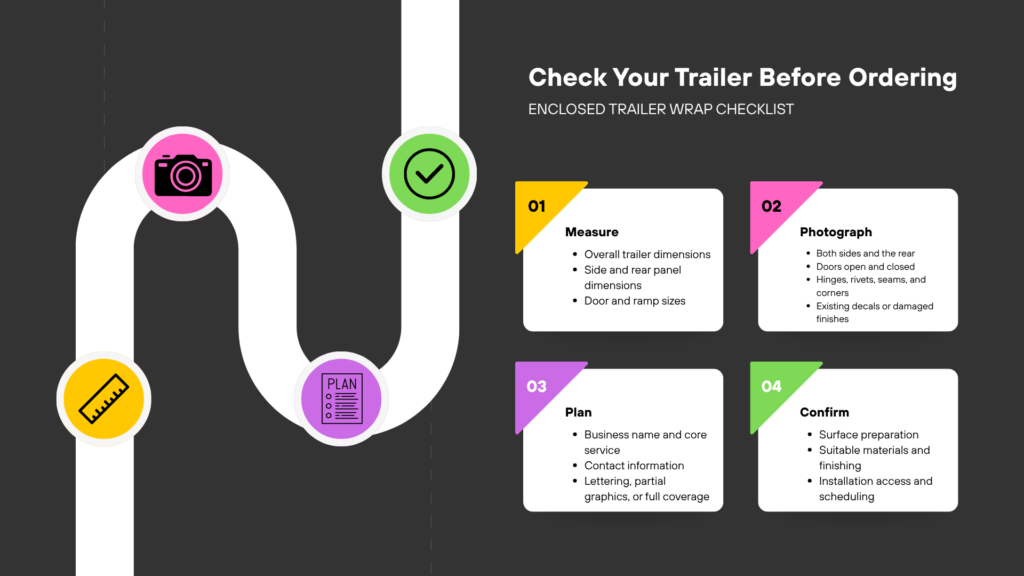
Collect these details before requesting a trailer wrap quote:
- Overall trailer length, height, and width.
- Printable panel dimensions on both sides and the rear.
- Door sizes and locations, including the ramp or rear door.
- Positions of hinges, handles, locks, seams, rivets, and trim.
- Existing graphics, decals, repairs, dents, or damaged finishes.
Take square-on photos of both sides and the rear. Include close-ups of seams, rivets, hinges, corners, and any areas where the surface looks worn. Photograph the trailer with doors open and closed so the design team can understand how its configuration changes.
These details help the shop assess the project and prepare a more informed estimate. They do not replace a professional check of the trailer’s dimensions and surface before production or installation.
How do doors, rivets, and surface condition affect the design?
An enclosed trailer has moving parts and panel breaks that can interrupt a graphic. Doors may cover part of a message when opened, while hinges, handles, and locks limit where important information can sit. Curved corners can also affect the usable design area.
Consider the landscaping contractor in the opening example. If the phone number sits across the rear ramp, opening the trailer could split or hide it. Placing essential contact details on a suitable fixed panel may avoid that problem. This is an illustrative example, not a completed customer project.
Rivets and seams also need attention. They affect the available layout and may influence material selection and installation. The shop should assess how the graphics can work with the trailer’s construction.
Surface condition matters just as much. Old decals, peeling finishes, damaged panels, and previous repairs can affect whether a surface is suitable for wrapping. Do not assume every painted or previously wrapped area is ready for new vinyl.
Before approving the trailer wrap design, provide photos of any concerns and ask whether further inspection or preparation is required.
Should you choose lettering, partial graphics, or a full wrap?
The right option depends on the message, available panel space, trailer condition, and how much coverage you need. Sarasota Sign Shop offers enclosed trailer graphics, including lettering and partial or full graphics for commercial trailers.
| Option | Suitable goal | Limitation |
| Enclosed trailer lettering | Display a business name, phone number, logo, or short service message. | Provides less background coverage and depends on suitable panel space. |
| Partial trailer wraps | Combine branding and printed graphics on selected areas. | The design must work with uncovered panels and existing trailer colours. |
| Full trailer wraps | Create a more extensive, coordinated design across the trailer. | Requires careful assessment of the entire surface, hardware, and moving sections. |
Partial trailer wraps may suit a contractor who needs a clear business identity without covering every panel. Lettering can work when the main priority is displaying a name and contact details. A full wrap allows broader use of colour and imagery, but it also requires planning across more of the trailer.
Review examples of completed graphics to explore different approaches. If your company also operates trucks or vans, consider how the trailer graphics could match your vehicle wraps for your fleet.
What information should the graphics make easy to read?
For most contractor trailer graphics, start with three essentials: the business name, the main service, and one contact method. A logo can help customers recognise the company, but it should not make the other information difficult to read.
Think about two different viewing situations.
On the road: Other road users may see the trailer briefly from another vehicle or while passing it. Keep the main message short and make the business name easy to identify.
At a jobsite: Homeowners, property managers, and other contractors may have more time to read the graphics while the trailer is parked. This creates room for a short service description or website address, provided the layout remains clear.
For example, an HVAC contractor might prioritise its logo, “Heating and Air Conditioning,” and phone number rather than listing every service it offers.
Effective contractor trailer graphics should also account for the trailer’s rear doors and side panels. Place essential details where hardware, door movement, and panel breaks are least likely to interfere with them. A focused message is usually easier to organise than a long list of services.
What should you confirm about materials and installation?
Material selection should follow the trailer’s surface, shape, intended use, and coverage requirements. The right choice for one trailer may not suit another, particularly when their finishes, panel construction, or existing graphics differ.
Ask the shop which vinyl and finishing options suit your trailer. Sarasota Sign Shop produces trailer graphics using professional-grade vinyl, printed graphics, laminating, and contour-cut lettering where appropriate. The final specification should reflect the needs of the individual project.
Lamination and professional finishing should also be considered where printed graphics require them. Rather than assuming every material or finish is suitable, ask what is recommended for the trailer’s surface and expected working conditions.
Before scheduling installation, confirm:
- Whether the trailer needs cleaning, decal removal, repairs, or other preparation.
- Whether the existing surface is suitable for the proposed graphics.
- Whether doors, hinges, handles, and other moving parts need special consideration.
- How the trailer must be positioned or made accessible for installation.
- Whether any curing or waiting requirements apply to the chosen materials.
- How long the trailer needs to remain unavailable for work.
Sarasota Sign Shop handles design, printing, finishing, and installation in house, allowing these stages to be coordinated through one team. The schedule should still be confirmed for the specific trailer and scope of work.
What should you send with a trailer wrap quote request?
A useful quote request gives the sign shop enough information to assess the trailer before finalising the design. You do not need to solve every layout question yourself, but clear photos and specifications help establish what needs to be checked.
Use this checklist before contacting a shop for Sarasota trailer wraps:
- Overall trailer dimensions and printable panel measurements.
- Square-on photos of both sides and the rear.
- Photos showing doors open and closed.
- Close-ups of rivets, hinges, seams, corners, and damaged areas.
- Your logo in a vector format, if available.
- Preferred coverage: lettering, partial graphics, or a full wrap.
- Details of existing graphics or previous repairs.
- How the trailer is used and where it operates.
- Your preferred installation date and any scheduling constraints.
Can hardware be covered? The answer requires a shop assessment. Some graphics may be planned around suitable fixed panels, but doors and moving components must remain functional. Do not assume hinges, locks, handles, or other hardware can simply be covered.
Once you have these details, send them with your trailer wrap ordering checklist request or contact the shop to discuss the project.

Get your enclosed trailer wrap ready to order
A successful trailer graphics project starts with the actual trailer, not an unverified mockup. Its dimensions, surface condition, doors, rivets, and working configuration all influence the design and installation plan.
For contractors in Sarasota and surrounding areas, including Bradenton, Lakewood Ranch, and Venice, the next step is to gather clear photos, record the measurements, and decide which information customers need to see.
Enclosed trailer wraps can range from simple lettering to partial or full coverage. The right choice depends on your trailer and business requirements.
Send Sarasota Sign Shop your trailer photos, dimensions, logo, and coverage preferences to discuss the project and request a quote. This gives the team a starting point for assessing the surface, planning the layout, and confirming the next steps before artwork approval.