
Many businesses focus heavily on design when planning signage. They choose colors, logos, and materials carefully. But one of the most common mistakes is overlooking placement. Even well-designed signs can fail if they are not positioned correctly.
For business signage Sarasota, placement is often the difference between a sign that gets noticed and one that gets ignored. A sign must be seen before it can be read. It must be read before it can influence action.
Sign placement directly affects visibility, readability, and overall performance. This article explains how placement works in real-world conditions and what factors determine whether a sign actually delivers results.
Why Placement Often Matters More Than Design
Question: Why is placement critical?
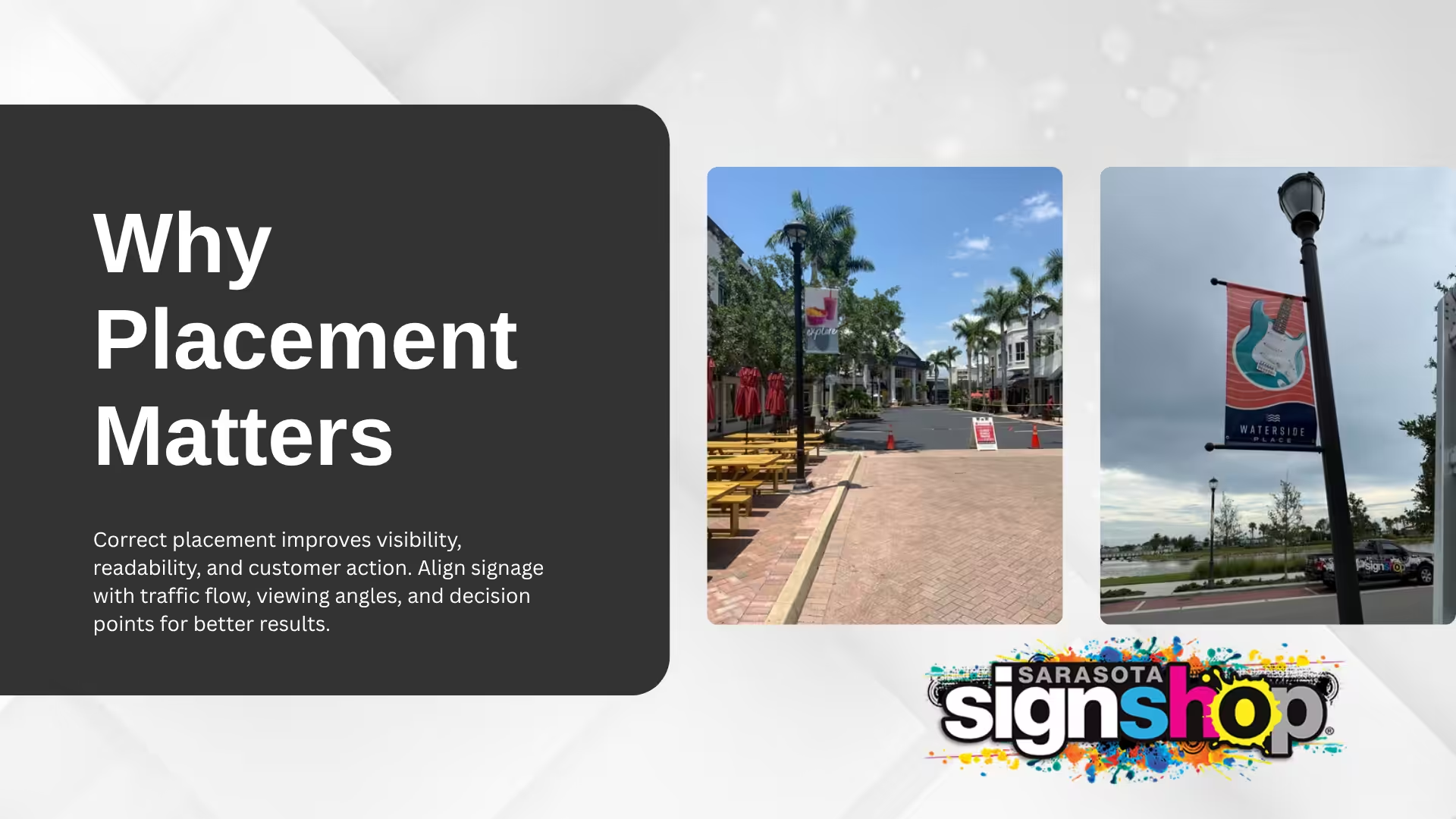
A sign can have strong design and still fail if people cannot see it. Visibility always comes first. If a sign is partially blocked, too high, or outside the natural line of sight, it loses effectiveness.
People do not search for signs. They notice them only when they appear clearly in their field of view. That means placement determines whether your message is even received.
For example, a well-designed storefront sign placed above the typical viewing angle may be missed by both drivers and pedestrians. In contrast, a simpler sign placed directly in the line of sight can perform better.
This is why experienced providers of commercial signage Sarasota focus on placement early in the process, not after design is complete.
Line of Sight and Viewing Angles
Question: How do people actually see signs?
People see signs based on natural viewing behavior. Most people look straight ahead or slightly downward when walking or driving. Signs placed outside this range are less likely to be noticed.
Line of sight refers to the direct path between the viewer’s eyes and the sign. If anything blocks that path, visibility drops. Common obstructions include parked vehicles, landscaping, poles, and architectural features.
Viewing angle also matters. A sign that faces away from traffic or is angled incorrectly may not be readable until it is too late to act.
For effective sign placement, the sign should face the direction of traffic or foot flow. It should also be positioned where there are no major visual barriers.
Distance and Readability
Question: How far away should a sign be readable?
A sign must be readable at the distance where decisions are made. For drivers, this distance increases with speed. For pedestrians, it is shorter but still important.
Letter size plays a major role. A common guideline is that every inch of letter height provides about 10 feet of readability. For example, 6 inch letters are readable from about 60 feet away.
If a sign is placed too far from the viewer without proper scaling, it becomes unreadable. If it is too close, there may not be enough time to process the message.
Good sign readability depends on matching placement with appropriate size and spacing. This ensures the message can be understood quickly and clearly.
Traffic Flow and Movement Patterns
Question: How does movement affect visibility?
People move through environments in predictable ways. Vehicles follow traffic patterns. Pedestrians follow walkways, entrances, and pathways.
Signs should be placed along these natural paths. If a sign is outside the flow of movement, fewer people will see it.
Speed also matters. Drivers have only a few seconds to notice, read, and react to a sign. That means placement must account for approach direction and decision points such as turns or entrances.
For example, a sign placed after a driveway entrance is less effective than one placed before it. By the time the driver sees it, the opportunity to turn may already be missed.
Effective storefront visibility depends on aligning signage with how people move, not just where space is available.
Height, Mounting, and Positioning
Question: Where should a sign be installed?
Height and mounting location directly affect visibility. Signs that are too high may fall outside the normal viewing range. Signs that are too low may be blocked by vehicles or obstacles.
The building itself also influences placement. Storefront signs should align with architectural features and be positioned where customers naturally look when approaching.
Mounting surfaces matter as well. Glass, stucco, concrete, and metal all affect how and where signs can be installed.
For business signs Sarasota, proper positioning ensures that signage is both visible and structurally appropriate for the environment.
Common Placement Mistakes Businesses Make
Question: What goes wrong most often?
Several placement mistakes reduce signage performance:
Blocked signs
Trees, parked cars, or other structures obstruct visibility.
Incorrect height
Signs placed too high or too low fall outside the natural line of sight.
Wrong direction
Signs facing away from traffic or angled incorrectly reduce readability.
Poor distance planning
Signs that are too small for their placement distance are hard to read.
Late placement decisions
Waiting until after construction or installation planning can limit options.
These issues are common in business signage Sarasota when placement is treated as an afterthought instead of part of the initial planning process.
How Proper Placement Improves Business Results
Question: What happens when placement is done correctly?
When placement is planned correctly, signage becomes more effective immediately.
Better visibility
More people notice the sign because it is placed in their line of sight.
Improved readability
Clear positioning allows enough time to process the message.
Stronger brand recognition
Consistent visibility increases familiarity over time.
Increased customer action
More people are able to find, enter, or contact the business.
For example, a retail business that adjusts sign placement to face incoming traffic may see increased walk-in activity. A service company with properly placed vehicle graphics can improve local recognition simply through daily exposure.
This is why experienced providers of commercial signage Sarasota focus on placement as a core part of the process.
Conclusion
Sign placement is one of the most important factors in signage performance. Even strong design cannot overcome poor positioning. A sign must be visible, readable, and aligned with how people move through an environment.
For business signage Sarasota, success depends on understanding line of sight, distance, traffic flow, and installation positioning. When these factors are planned correctly, signage becomes a reliable tool for visibility and business growth.
If you are planning signage, focus on placement early. It will determine whether your investment actually delivers results.
Contact Sarasota Sign Shop Today
If you are planning signage and want it positioned for real-world performance, you can request a quote or schedule a consultation with Sarasota Sign Shop.