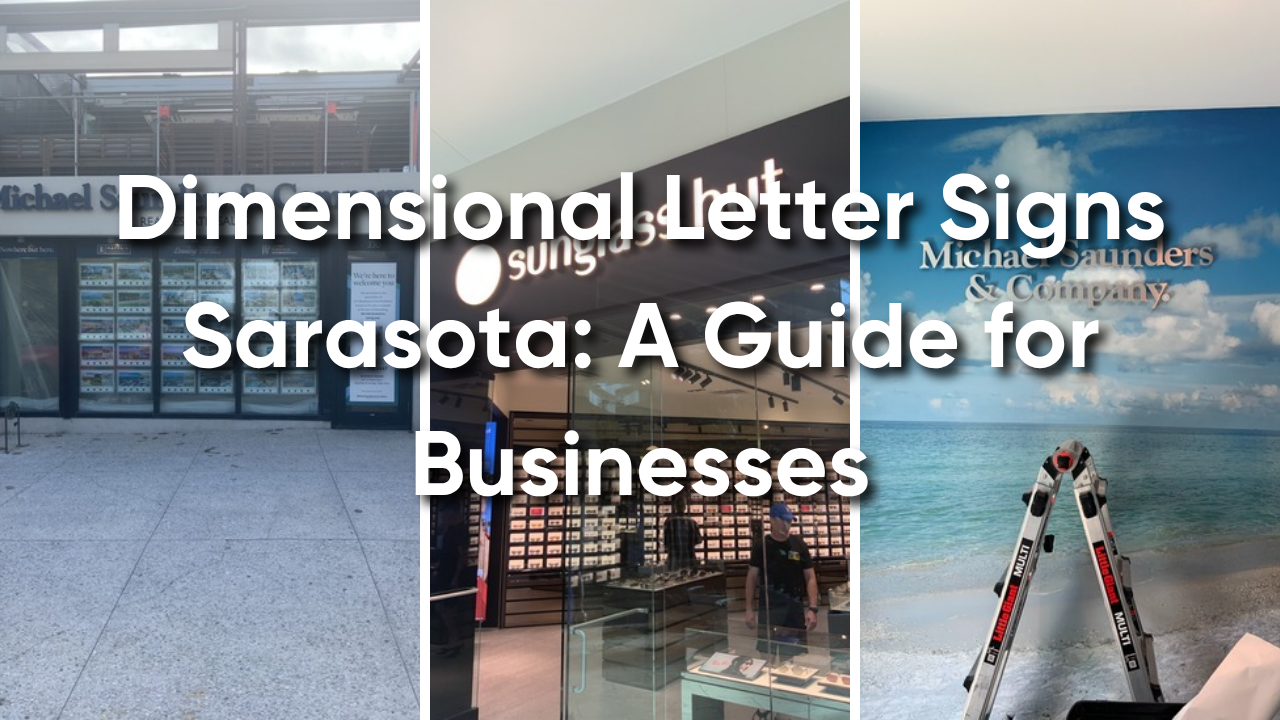
Choosing signage for a commercial property involves more than selecting a design that looks good on a screen. Sarasota businesses may need storefront identification, building signage, interior branding, or a replacement for an outdated sign. Several formats may be suitable, including flat panels, window graphics, and raised lettering.
Dimensional letter signs Sarasota businesses choose should suit the building, viewing distance, brand, mounting surface, and installation conditions. Dimensional letters can provide clear business identification when the design is planned around the property and the way customers approach it.
Before selecting this format, businesses should evaluate five areas: visibility, surface, brand, environment, and installation. These factors help determine whether dimensional letters are a practical choice for the site.
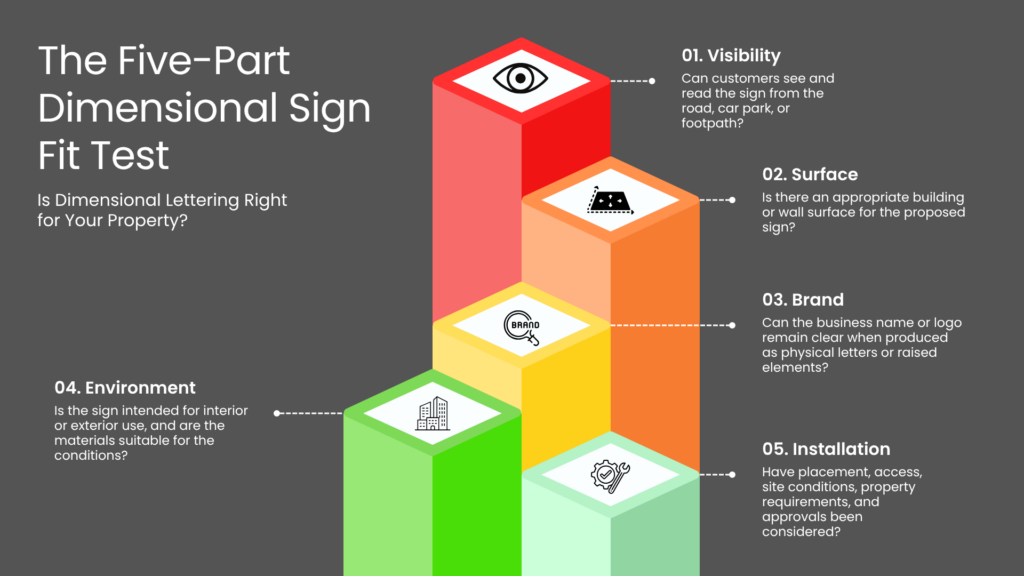
Will Dimensional Letters Be Easy to See From Where Customers Approach?
Visibility should be considered before materials or decorative details. A sign may look clear from a close distance but become difficult to read when viewed from a road, parking area, or across a commercial property.
Businesses should consider:
- How far away customers will be when they first see the sign
- Whether customers approach by vehicle, on foot, or both
- The angle from which the sign will be viewed
- Parking areas and access routes
- Landscaping or other objects that may block the sign
- Nearby storefronts and competing visual information
- Available wall space
- Lighting and the time of day the sign needs to work
The right dimensional letter size depends on viewing distance, available wall space, letter style, contrast, placement, and how customers approach the property. There is no single letter size that suits every building or business.
For example, a professional office in a low-traffic commercial building may have different requirements from a retail business located beside a busy road. A sign that works well for pedestrians may not provide enough visibility for passing drivers.
What Should Dimensional Letter Signs Actually Say?
The primary purpose of a building or storefront sign is usually business identification. The design should generally prioritise the business name, logo, or another essential brand identifier.
Adding too much information can reduce readability. A primary sign may not be the right place for a phone number, website, long tagline, list of services, or promotional message.
The farther away a sign needs to work, the less information it should usually be asked to communicate. Secondary information may be better suited to window graphics, directory signs, wayfinding, or other parts of a wider signage system.
Where Can Dimensional Letters Be Installed?
Dimensional letters can be considered for suitable exterior and interior commercial applications. Potential locations include:
- Exterior building surfaces
- Storefront areas
- Business entrances
- Interior reception walls
- Lobby feature walls
- Office interiors
- Other appropriate commercial wall surfaces
The proposed location should be reviewed before the final sign design or mounting approach is selected. The building surface, available space, existing signage, access, and property requirements can all affect the project.
A business leasing a commercial property may also need to obtain approval from a landlord, property manager, shopping centre operator, or commercial development manager.
Why Does the Wall or Building Surface Matter?
The mounting surface can affect placement, preparation, installation access, and the final appearance of the sign. A surface that appears suitable in a photograph may require closer review before production begins.
Useful questions include:
- What surface will the letters be installed on?
- Is the proposed area flat and accessible?
- Is there existing signage in the same location?
- Is the building owned or leased?
- Are there property-management restrictions?
- Can installers access the area safely?
- Are there existing mounting points or other site conditions to consider?
The building surface and site conditions should be evaluated before the final mounting approach is selected. Technical decisions should be based on the approved design and the actual property rather than assumptions made from a digital rendering.
Does Your Logo Work Well as a Dimensional Sign?
Not every logo translates into physical signage in the same way. A design that works well on a website or printed document may need careful review before it is produced as dimensional lettering.
Potential challenges include:
- Very thin lines
- Small secondary text
- Fine details
- Multiple small elements
- Low contrast
- Complex shapes
- Letterforms that become difficult to read at the required size
A logo should be assessed for both fabrication and real-world readability. The goal is not necessarily to change the brand, but to ensure that its important elements remain clear when produced as a physical sign.
This is especially important when the sign will be viewed from a distance. A small detail that is visible on a computer screen may not be meaningful on a building façade or storefront.
Should Dimensional Letters Match Other Business Signage?
A building sign should form part of the same brand system as the rest of the business signage. Dimensional letters may need to coordinate with:
- Storefront signs
- Window graphics
- Door graphics
- Interior signs
- Wayfinding
- Wall graphics
- Fleet graphics
- Other commercial signs
Brand consistency includes the business name, logo, colours, spacing, and overall visual treatment. Different production methods can still work together when they are planned as part of one signage system.
For example, a business may use dimensional letters on the exterior, window graphics for opening hours, and wall graphics inside the reception area. Each sign can have a different function while still supporting the same brand.
Are Dimensional Letters Being Used Indoors or Outdoors?
The intended environment is an important part of sign selection. Interior and exterior applications may have different requirements for materials, appearance, exposure, placement, and maintenance.
Exterior Applications
Exterior dimensional letters must be considered in relation to the conditions at the property. Relevant factors may include:
- Sunlight
- Heat
- Rain
- Humidity
- Wind exposure
- Building orientation
- Placement
- Cleaning and maintenance requirements
Material and production choices should be suitable for the intended application. Businesses should not assume that a material or finish appropriate for an interior wall will be suitable for an exposed exterior location.
Interior Applications
Interior dimensional letters may be used for reception areas, lobbies, office walls, customer-facing spaces, or other suitable locations. Priorities may include:
- Brand presentation
- Wall compatibility
- Viewing distance
- Interior lighting
- Available wall area
- Relationship to furniture and other interior signs
The same business may use dimensional elements both indoors and outdoors, but each application should be assessed separately.
How Does Sarasota Weather Affect Exterior Dimensional Signs?
Sarasota’s outdoor conditions should be considered when planning exterior business signs. Sunlight, heat, rain, humidity, orientation, and exposure can affect the suitability of materials and finishes.
Maintenance requirements should also be considered during planning. Cleaning access, the surrounding landscape, and the sign’s position may affect how easily the finished sign can be inspected and maintained.
There is no universal lifespan for every dimensional sign. Service life depends on the selected materials, environmental exposure, installation conditions, maintenance, and other project factors.
Businesses planning exterior signage may also benefit from reviewing guidance about durable signs for Florida weather and maintaining business signage in Sarasota’s climate.
What Are Dimensional Letter Signs Made From?
Dimensional letter signs use raised letters, logos, or other physical elements rather than presenting the entire design on one flat printed surface. The selected material depends on the design, location, desired appearance, installation conditions, and whether the sign is intended for interior or exterior use.
Businesses should discuss the available material options with the sign provider before making a final decision. The appropriate choice may depend on:
- The size and shape of the letters
- The level of detail in the logo
- The mounting surface
- Interior or exterior exposure
- Desired finish
- Viewing distance
- Cleaning and maintenance needs
- Installation requirements
Material selection should follow the needs of the specific project rather than a general assumption that one material is suitable for every sign.
What Should Businesses Know About Dimensional Letter Installation?
Installation should be considered during design, not after fabrication is complete. The finished sign needs to be positioned, aligned, and installed in a way that suits the property and supports clear identification.
Important considerations include:
- Final sign placement
- Building or wall surface
- Letter spacing
- Alignment
- Access to the installation area
- Existing signage
- Property requirements
- Site conditions
- Applicable code requirements
A design that looks correct in a rendering may need adjustments once the actual building, wall, access route, and surrounding features are reviewed.
Do Dimensional Letter Signs Require a Permit in Sarasota?
Permit or approval requirements can vary based on the sign, property, location, and jurisdiction. Businesses should verify the requirements for the specific project before production and installation.
Property owners, landlords, developers, and property managers may also have separate approval requirements. These should be identified early so they do not affect the project later.
Dimensional Letters vs Flat Sign Panels: What Is the Difference?
Dimensional letters use individual raised letters, logos, or other elements mounted to an appropriate surface. They create physical depth and may suit businesses that want the name or logo presented as separate elements.
A flat panel sign presents the design on one unified surface. This format may be suitable when a business needs to include several elements within a defined panel area.
Neither format is automatically right for every property. The decision depends on:
- Building design
- Available sign area
- Viewing distance
- Brand design
- Amount of information required
- Property requirements
- Installation conditions
- Overall signage plan
Businesses should compare the formats based on how well they communicate the required information on the actual property.
Dimensional Letters vs Window Graphics
Dimensional letters are commonly considered for permanent business or brand identification on suitable building or wall surfaces. Window graphics can support branding, privacy, promotions, opening hours, and other business information.
These formats can work together. For example, dimensional letters may identify the business above a storefront while window graphics provide opening hours, contact details, or additional brand information.
The best approach depends on the available surfaces and the role each sign needs to perform. This is why dimensional letters should be considered as part of the wider storefront signs Sarasota businesses may require.
When Are Dimensional Letter Signs a Good Fit?
Dimensional letters may be worth considering when:
- The property has an appropriate mounting surface
- The business name or logo translates clearly into physical elements
- The sign can be sized for the required viewing distance
- The business needs permanent building or interior identification
- The property allows the proposed sign format
- The installation conditions support the project
- The sign can be coordinated with other business signage
This may apply to retail businesses, restaurants, hospitality venues, professional offices, medical and dental practices, commercial tenants, and companies opening or rebranding a location.
What Types of Sarasota Businesses Use Dimensional Letter Signs?
Dimensional lettering may be suitable for several commercial applications.
Retail businesses: Exterior storefront identification and brand lettering.
Restaurants and hospitality businesses: Building, entrance, or interior identification.
Professional offices: Exterior business signs or reception-area branding.
Medical and dental offices: Building identification, reception branding, and interior wall signage.
Commercial developments: Tenant or property-related identification where the proposed format suits the site.
Corporate offices: Lobby, reception, and interior brand applications.
The appropriate sign format depends on the property, brand, viewing conditions, and installation requirements rather than the industry alone.
When Might Another Sign Type Make More Sense?
Another format may deserve consideration when:
- The available sign area is very limited
- The logo contains excessive fine detail
- The business needs significant secondary information
- Windows are the primary visible surface
- Property rules prescribe another format
- A property-level sign is more important than building identification
- The mounting conditions do not suit the proposed design
Dimensional letters are not automatically better than a flat panel, window graphics, or another sign type. A practical signage decision should be based on the needs of the property and the information customers must receive.
What Affects the Cost of Dimensional Letter Signs?
The cost of dimensional letter signs depends on the scope and requirements of the individual project. Factors may include:
- Overall sign size
- Number of letters or logo elements
- Material selected
- Design complexity
- Finish
- Installation conditions
- Access to the site
- Site preparation
- Existing sign removal where relevant
- Approval or permitting requirements where applicable
Two dimensional signs of similar overall size can have different project costs because the number of elements, materials, fabrication requirements, installation surface, and site conditions may differ.
Businesses comparing quotes should review what is included rather than focusing only on the final price. The quote should make clear which design, production, preparation, installation, and related project requirements have been considered.
Why In-House Production Matters for a Dimensional Sign Project
Sarasota Sign Shop positions itself as a full-service commercial signage partner with in-house design and production capabilities. This matters because a dimensional sign project should be considered alongside the rest of a business’s signage rather than as an isolated design.
Better Coordination
When design and production are handled within the same operation, the project can be reviewed as one process. This supports communication between the people developing the design and the people preparing the approved work for production.
Brand Consistency
Colour, layout, and brand details can be coordinated with related printed graphics, storefront materials, wall graphics, and other signage.
Fewer Outsourced Handoffs
Sarasota Sign Shop’s in-house approach is intended to avoid operating only as a broker that sends production to unrelated providers. Businesses can discuss the wider project with one signage partner.
Commercial Project Oversight
Dimensional letters may form only one part of a larger signage requirement. A commercial property may also need window graphics, wayfinding, building signs, tenant identification, or interior branding. Reviewing these needs together can help keep the signage consistent and practical.
What Is the Process for Ordering Dimensional Letter Signs?
Step 1: Review the Property
Consider the building, storefront, proposed sign location, viewing conditions, mounting area, existing signage, and access requirements.
Step 2: Review the Brand
Assess the business name, logo, colours, letterforms, and readability at the required size and distance.
Step 3: Review the Sign Approach
Determine whether dimensional letters are the appropriate format or whether a panel, window graphics, or another option may suit the property better.
Step 4: Develop the Design
The design should account for scale, spacing, readability, branding, available wall space, and property constraints.
Step 5: Confirm Production and Installation Requirements
Material, finish, mounting, access, site conditions, and approval requirements should be reviewed before the project is finalised.
Step 6: Produce and Install
Once the design and project requirements are approved, the sign can move through production and installation.
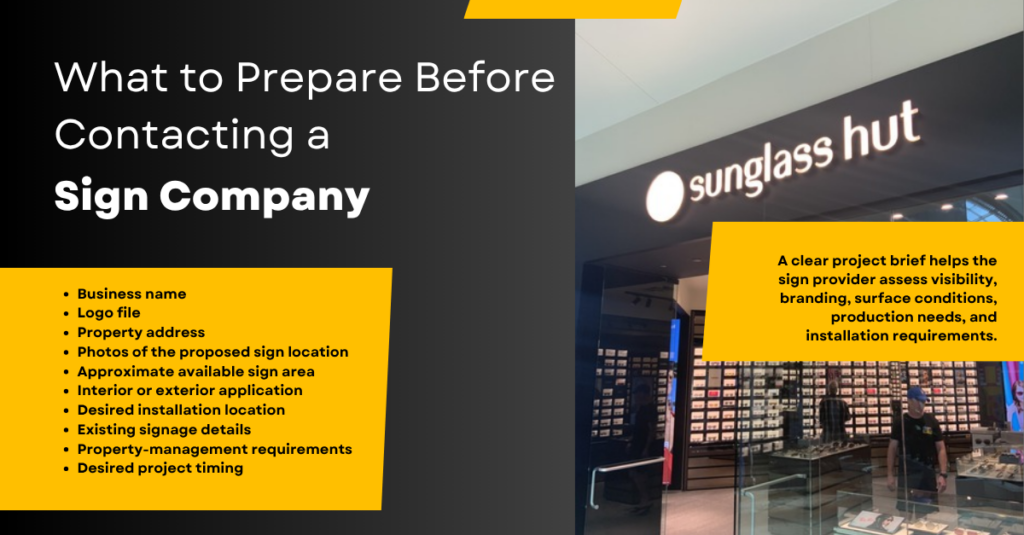
Before Requesting a Dimensional Sign Quote
Businesses can help improve the accuracy of the initial discussion by preparing:
- Business name
- Logo file
- Property address
- Photos of the proposed sign location
- Approximate available sign area
- Interior or exterior application
- Desired installation location
- Existing signage information
- Property-management requirements
- Desired project timing
These details help the signage provider understand the project before recommending a design or preparing a quote.
Dimensional Letter Signs Sarasota FAQs
What are dimensional letter signs?
Dimensional letter signs use individual raised letters, logos, or graphic elements rather than presenting the entire design on one flat surface. They may be used for exterior building identification or interior branding, depending on the materials, mounting surface, viewing conditions, and project requirements.
Are dimensional letters good for storefronts?
They can be suitable for storefronts when the available surface, sign size, viewing distance, brand design, property requirements, and installation conditions support the format. The sign should be evaluated from the places where customers will actually approach and view the business.
Can a logo be made into a dimensional sign?
Potentially. Logos with clear forms and readable lettering may translate more easily than designs with very small text or fine detail. The logo should be reviewed for physical production, scale, contrast, and real-world readability before the final design is approved.
Can dimensional letters be used indoors?
Yes. Dimensional elements can be used for suitable interior applications such as reception areas, lobbies, office walls, and other commercial spaces. The design should account for the wall surface, interior lighting, viewing distance, available space, and relationship to other interior signage.
Can dimensional letters be used outdoors in Sarasota?
Potentially, provided the selected materials, finish, design, and installation approach are appropriate for the intended outdoor application and site conditions. Sun, heat, rain, humidity, exposure, placement, and maintenance should be considered before the project is approved.
How much do dimensional letter signs cost?
Cost varies according to the size, number of letters or logo elements, materials, design complexity, finish, installation, access, site conditions, and other project requirements. A quote should explain the scope of the work rather than relying on a general price range.
Do dimensional signs need a permit?
Requirements can vary according to the sign, property, location, and jurisdiction. Businesses should verify the requirements for the specific project before production and installation. Landlords, property managers, developers, or commercial centres may also have separate approval requirements.
How long do dimensional signs last?
There is no universal lifespan for every dimensional sign. Service life depends on the selected materials, environmental exposure, installation conditions, maintenance, placement, and other project factors. The intended use and site should be reviewed before materials are selected.
Can dimensional letters and window graphics be used together?
Yes. Dimensional letters can provide primary business identification, while window graphics can support branding, privacy, opening hours, promotions, or other information. Using both formats may help a business assign different communication tasks to different surfaces.
Common Mistakes to Avoid
Businesses considering dimensional lettering should avoid:
- Choosing letter size before evaluating viewing distance
- Making the design too detailed to read
- Assuming every logo translates perfectly into dimensional form
- Selecting materials before confirming interior or exterior use
- Ignoring the mounting surface
- Treating installation as an afterthought
- Adding too much information to the primary building sign
- Assuming dimensional letters are always better than a panel sign
- Focusing only on close-up appearance
- Ignoring visibility from roads or parking areas
- Ordering signage without checking property or approval requirements
- Designing the building sign separately from the rest of the storefront signage
Conclusion
Dimensional letter signs can be a practical option for Sarasota businesses that need clear building, storefront, or interior identification. The right choice depends on more than the appearance of the letters. Businesses should evaluate the five-part fit test: visibility, surface, brand, environment, and installation.
The sign should be readable from the relevant customer approach path, suitable for the mounting surface, consistent with the business brand, appropriate for its environment, and planned around the actual installation conditions.
Businesses considering dimensional letter signs Sarasota projects can contact Sarasota Sign Shop to review the property, branding, sign location, and project requirements before requesting a quote.